Get unique, complex parts easily. No matter your requirements, Chaoyi Spring creates hard-to-produce coil springs and wire forms.
Let us help you create the custom wire form you need, from S-hooks and J-hooks to utility hooks and more.
We work closely with customers across a wide range of industries, helping them design and manufacture made-to-order parts.
Why choose Chaoyi Spring? We prioritize customer-focused collaboration, modern equipment and the latest technology to make your parts per print.
Find the information and guidance you need, from measuring a spring to learning about materials, placing an order and much more.
Spring compression, a fundamental concept in physics and engineering, describes the act of squeezing a spring and storing potential energy within it. Understanding spring compression is crucial for various applications,


Spring compression, a fundamental concept in physics and engineering, describes the act of squeezing a spring and storing potential energy within it. Understanding spring compression is crucial for various applications, from simple mechanical devices to complex automotive systems. This guide provides a comprehensive overview of spring compression, covering its principles, calculations, and practical applications. We'll explore the factors influencing compression, delve into the equations governing it, and examine real-world scenarios where spring compression plays a vital role.
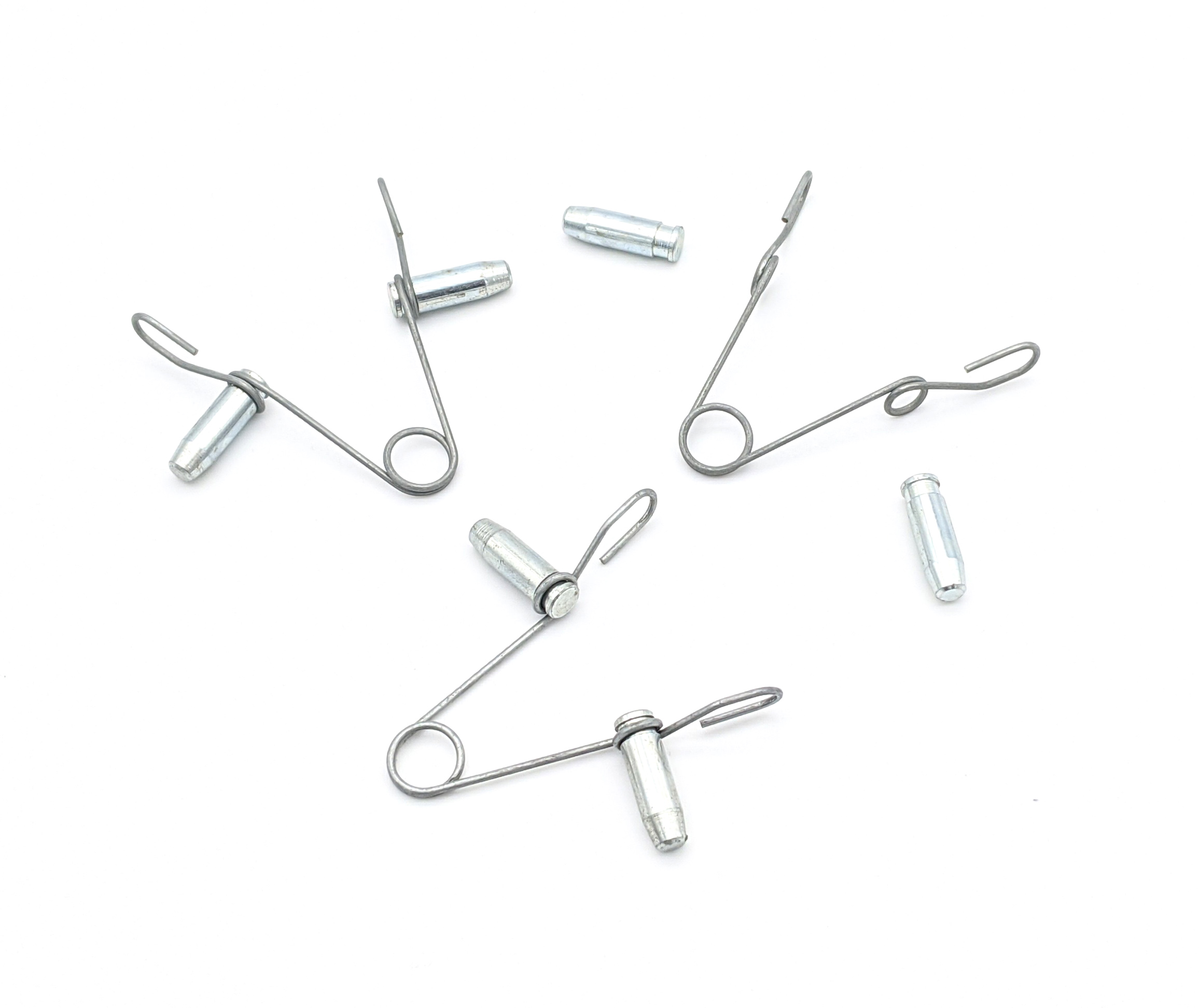
A spring, a coil of elastic material, possesses the remarkable ability to store energy when compressed or stretched. This stored energy, known as potential energy, is released when the spring returns to its original shape. Spring compression, in essence, is the act of shortening the length of a spring by applying an external force. This compression causes the spring to exert a counterforce, resisting further deformation.
Think of it like a bouncy ball. When you press down on it, you're compressing it. The ball stores energy and then springs back to its original shape when you release the pressure. Springs work in a similar way, but instead of just bouncing back, they can be used to provide a controlled force or store energy for later use.
Several factors influence how much a spring compresses under a given force. These include:
Hooke's Law, a fundamental principle in physics, describes the relationship between force and displacement for elastic materials. This law forms the basis for understanding and calculating spring compression. It states that the force required to compress or stretch a spring is directly proportional to the displacement from its equilibrium position.
Mathematically, Hooke's Law can be expressed as:
F = -kx
Where:
The negative sign indicates that the force exerted by the spring opposes the displacement. This means that if you push the spring down, it will push back up with an equal and opposite force.
Spring compression finds numerous applications across diverse fields. Here are a few prominent examples:
When working with springs, it's crucial to consider the following practical aspects:
Spring compression is a fundamental concept in physics and engineering that finds wide applications in various fields. Understanding the principles of spring compression, including Hooke's Law and the factors influencing it, is essential for designing and analyzing mechanical systems. By carefully considering practical considerations like spring fatigue and limits, we can utilize spring compression effectively and efficiently in a wide range of applications.
As you embark on your journey to master spring compression, remember that this is a subject that blends theory and practice. By understanding the underlying principles and applying them to real-world scenarios, you'll gain invaluable knowledge and skills that can be applied in diverse fields. So, go forth and explore the fascinating world of springs, unlocking their potential to shape the world around us!
Browse some of the custom wire forms and springs that we manufacture. Don’t see what you need? We specialize in made-to-order products that meet your application requirements.
Visit Our Gallery
Need a custom wire form or coil spring? We make it work. Fill out the contact form and a representative will respond within 1 business day. If you have a PDF or CAD file, you can submit to request a quote.

Your Team For Innovative Wire Forming
We provide solutions for complex, high-quality
wire forms and coil springs.
©Dongguan Chaoyi Hardware Spring Co.
Dongguan, Guangdong, China, IL 523565