Get unique, complex parts easily. No matter your requirements, Chaoyi Spring creates hard-to-produce coil springs and wire forms.
Let us help you create the custom wire form you need, from S-hooks and J-hooks to utility hooks and more.
We work closely with customers across a wide range of industries, helping them design and manufacture made-to-order parts.
Why choose Chaoyi Spring? We prioritize customer-focused collaboration, modern equipment and the latest technology to make your parts per print.
Find the information and guidance you need, from measuring a spring to learning about materials, placing an order and much more.
Compression springs are ubiquitous in our everyday lives, silently supporting countless mechanical systems. They are found in everything from car suspensions and door hinges to pens and medical devices. The

Compression springs are ubiquitous in our everyday lives, silently supporting countless mechanical systems. They are found in everything from car suspensions and door hinges to pens and medical devices. The process of manufacturing compression springs is a fascinating blend of engineering, precision, and meticulous craftsmanship. From initial design considerations to final quality control, every step is crucial in ensuring the spring's performance and longevity. This article delves into the intricacies of compression spring manufacturing, exploring the stages involved and the key factors that determine the quality of the final product.
The journey of a compression spring begins with a meticulous design process. It all starts with a clear understanding of the application and the desired spring characteristics. Factors like the load, force, deflection, and space constraints are carefully considered. Engineering software and specialized calculators help determine the optimal spring dimensions, including the wire diameter, coil diameter, and number of active coils. Material selection is also critical, taking into account the required strength, durability, and resistance to corrosion. Common materials include spring steel, stainless steel, and alloys like phosphor bronze and beryllium copper.
Once the design is finalized, the spring manufacturing process begins. There are two primary methods used: cold coiling and hot coiling. Cold coiling is commonly used for smaller springs, where wire is coiled at room temperature. The wire is fed into a coiling machine, which carefully bends and forms it into the desired helix. Hot coiling, on the other hand, is employed for larger springs or those made from materials that are difficult to cold coil. The wire is heated to a specific temperature, making it more malleable and easier to coil. After coiling, the springs undergo a series of crucial steps to ensure their quality and performance.
Heat treatment is often a crucial part of the compression spring manufacturing process. It involves subjecting the spring to controlled heating and cooling cycles to alter its properties. Heat treatment can enhance the spring's strength, hardness, and resistance to fatigue. This step is especially important for springs that are subjected to heavy loads or operate in demanding environments. After heat treatment, the springs may undergo various finishing operations, such as shot peening or grinding. These processes improve the spring's surface finish, reduce stress concentrations, and enhance its fatigue life.
Quality control is paramount in compression spring manufacturing. Springs undergo rigorous inspection and testing to ensure they meet the specified design requirements. Common inspection methods include visual inspection, dimensional checks, and material analysis. Testing involves subjecting the springs to various loads and conditions to assess their performance. Tests can include compression testing, fatigue testing, and stress relaxation testing. These tests are designed to identify any defects or weaknesses in the springs and ensure they meet the required safety and performance standards.
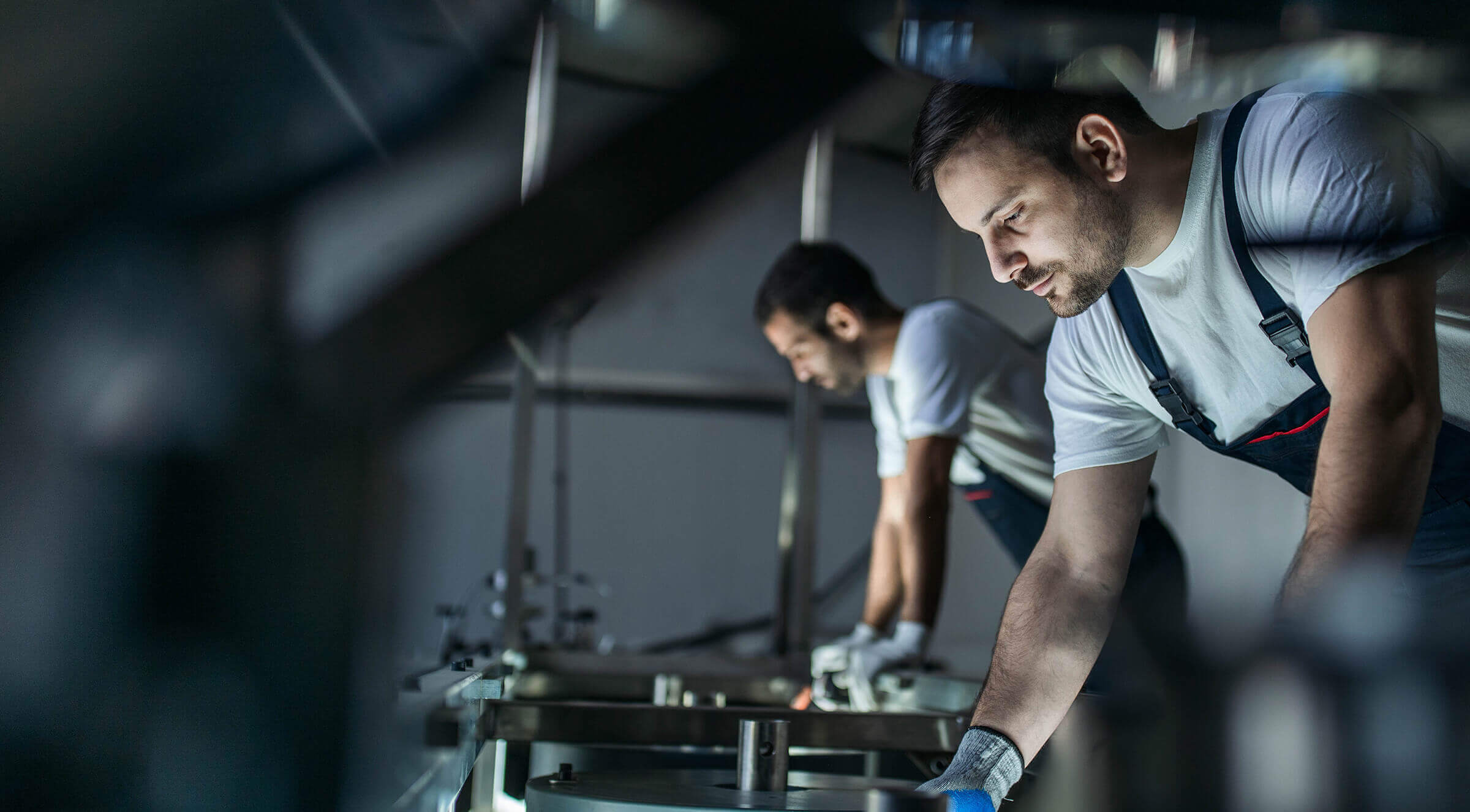
While machines play a crucial role in compression spring manufacturing, it's the skilled workforce that makes the difference. Experienced spring manufacturers possess a deep understanding of the materials, processes, and equipment. They can identify subtle variations in the springs and make adjustments to ensure the quality of the final product. Their expertise is invaluable in optimizing production processes, troubleshooting problems, and ensuring consistent quality.
Compression springs are found in countless applications, both large and small. Here are just a few examples:
As technology advances, compression spring manufacturing is evolving to meet new challenges and demands. Advances in automation, materials science, and manufacturing techniques are leading to more precise, efficient, and sustainable production processes. New materials, such as advanced alloys and composites, are being developed to enhance the performance and durability of springs. Moreover, the adoption of Industry 4.0 concepts, such as smart factories and digital twins, is transforming the manufacturing landscape, enabling greater efficiency and data-driven optimization.
From design to production, compression spring manufacturing is a sophisticated process that requires precision, expertise, and a deep understanding of material science and manufacturing techniques. The springs we encounter every day, often unnoticed, are the result of a carefully crafted process, ensuring their reliability and performance in diverse applications. As technology continues to evolve, compression spring manufacturing is poised for further advancements, leading to even more innovative and efficient solutions for a wide range of industries.
Browse some of the custom wire forms and springs that we manufacture. Don’t see what you need? We specialize in made-to-order products that meet your application requirements.
Visit Our Gallery
Need a custom wire form or coil spring? We make it work. Fill out the contact form and a representative will respond within 1 business day. If you have a PDF or CAD file, you can submit to request a quote.

Your Team For Innovative Wire Forming
We provide solutions for complex, high-quality
wire forms and coil springs.
©Dongguan Chaoyi Hardware Spring Co.
Dongguan, Guangdong, China, IL 523565