Get unique, complex parts easily. No matter your requirements, Chaoyi Spring creates hard-to-produce coil springs and wire forms.
Let us help you create the custom wire form you need, from S-hooks and J-hooks to utility hooks and more.
We work closely with customers across a wide range of industries, helping them design and manufacture made-to-order parts.
Why choose Chaoyi Spring? We prioritize customer-focused collaboration, modern equipment and the latest technology to make your parts per print.
Find the information and guidance you need, from measuring a spring to learning about materials, placing an order and much more.
Coil springs, those ubiquitous spirals of metal, are often taken for granted. We see them in countless everyday objects, from our car suspensions to the pens we use, but rarely


Coil springs, those ubiquitous spirals of metal, are often taken for granted. We see them in countless everyday objects, from our car suspensions to the pens we use, but rarely stop to appreciate their ingenuity and essential role in our world. These simple yet powerful devices embody the principles of physics and engineering, allowing us to harness and store energy in an elegant and efficient way. Let's delve into the fascinating world of coil springs and uncover the hidden stories behind their remarkable functionality.
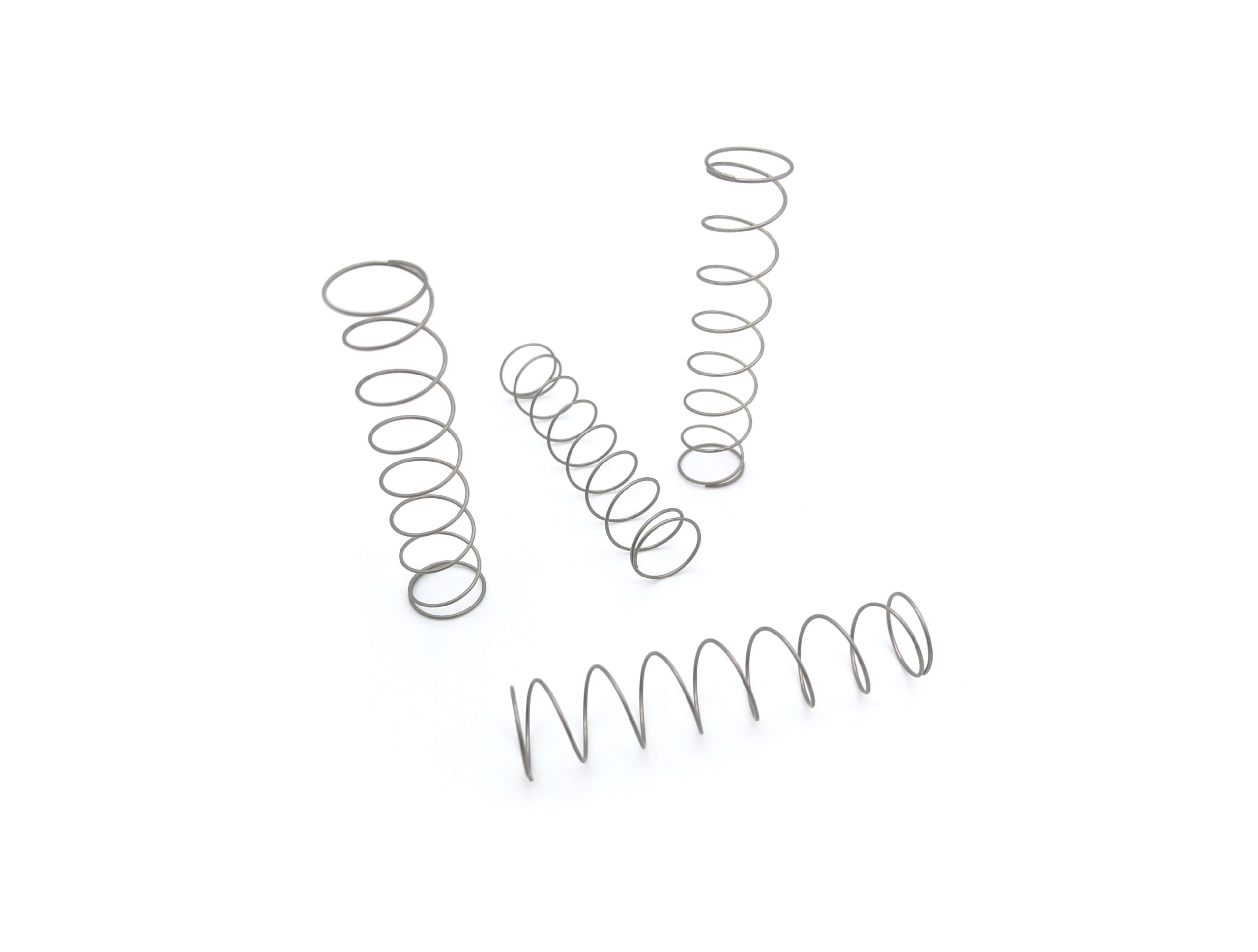
Imagine a piece of wire bent into a continuous spiral – that's the essence of a coil spring. These springs are designed to resist compression or extension, storing potential energy as they deform and releasing it when allowed to return to their original shape. Their seemingly simple structure belies the sophisticated physics and engineering principles that govern their behavior.
The core principle behind coil springs lies in Hooke's Law, a fundamental concept in physics. This law states that the force exerted by a spring is directly proportional to its displacement from its equilibrium position. In other words, the more you compress or stretch a coil spring, the stronger the force it exerts to resist that change.
The ability of a spring to store and release energy depends on its stiffness, a property known as the spring constant. A higher spring constant indicates a stiffer spring, meaning it requires more force to deform. Factors like the material used, the wire diameter, the number of coils, and the spring's geometry all contribute to its stiffness.
Coil springs come in a variety of configurations, each tailored to specific applications. Here are some of the most common types:
Compression springs, as their name suggests, are designed to resist compressive forces. They shorten when a load is applied, storing energy. You'll find these springs in countless applications, such as car suspensions, door closers, and even the springs in ballpoint pens.
Extension springs, on the other hand, are designed to withstand tensile forces. They lengthen under load, storing energy in the process. These springs are commonly used in garage door openers, clotheslines, and spring-loaded clamps.
Torsion springs are specialized coil springs designed to resist twisting forces. They rotate when a torque is applied, storing energy. You'll find them in applications like clothes pegs, spring-loaded hinges, and even some types of clocks.
The choice of material for a coil spring is crucial, as it directly influences its stiffness, durability, and resistance to corrosion. Steel is the most common material for coil springs, thanks to its high strength-to-weight ratio. Different types of steel, including spring steel and stainless steel, are used depending on the specific application and its demands.
Other materials are sometimes employed for specialized purposes. For instance, bronze springs are often used in applications where corrosion resistance is paramount. Copper springs, known for their excellent electrical conductivity, find their place in electrical components.
The applications of coil springs are truly boundless. They are essential components in countless products and systems, playing a crucial role in our modern world. Here are just a few examples:
Automotive Industry: Coil springs are fundamental to the suspension systems of cars, trucks, and motorcycles, providing a smooth ride and absorbing shocks from uneven roads. They are also used in clutches, brakes, and other critical components.
Manufacturing and Industry: Coil springs are widely used in manufacturing processes, from clamping and holding components to providing tension and recoil in various machinery.
Consumer Products: From the springs in our pens and toys to the springs in our furniture and appliances, coil springs are ubiquitous in everyday life. They add functionality, resilience, and durability to countless consumer products.
Electronics and Technology: Coil springs are found in electronics, often in the form of contact springs used for switching and actuating mechanisms. They are also used in mechanical actuators for precision applications.
Coil springs are a testament to the ingenuity of human design. Their simple structure and reliable performance have made them essential components in countless applications, spanning a vast range of industries and products. From the mundane to the extraordinary, coil springs quietly contribute to the functionality and ease of our modern lives.
As you go about your day, take a moment to appreciate the coil springs around you. They may not be glamorous, but their role in our world is undeniable. These humble spirals of metal continue to inspire innovation, proving that sometimes, the simplest solutions are the most effective. The next time you see a coil spring, remember the fascinating world of science and engineering that makes it tick.
Browse some of the custom wire forms and springs that we manufacture. Don’t see what you need? We specialize in made-to-order products that meet your application requirements.
Visit Our Gallery
Need a custom wire form or coil spring? We make it work. Fill out the contact form and a representative will respond within 1 business day. If you have a PDF or CAD file, you can submit to request a quote.

Your Team For Innovative Wire Forming
We provide solutions for complex, high-quality
wire forms and coil springs.
©Dongguan Chaoyi Hardware Spring Co.
Dongguan, Guangdong, China, IL 523565